Sven Ponds Farm — 2026-08-19
Temperature
Heat & cold risk
| Indicator | Historical frequency |
|---|---|
| Years with a day above 90°F (±7 days) | 0% |
| Years with a day above 95°F (±7 days) | 0% |
| Days below 55°F | 26% |
| Days below 45°F | 0% |
| Days below freezing | 0% |
150 sample days across 10 years
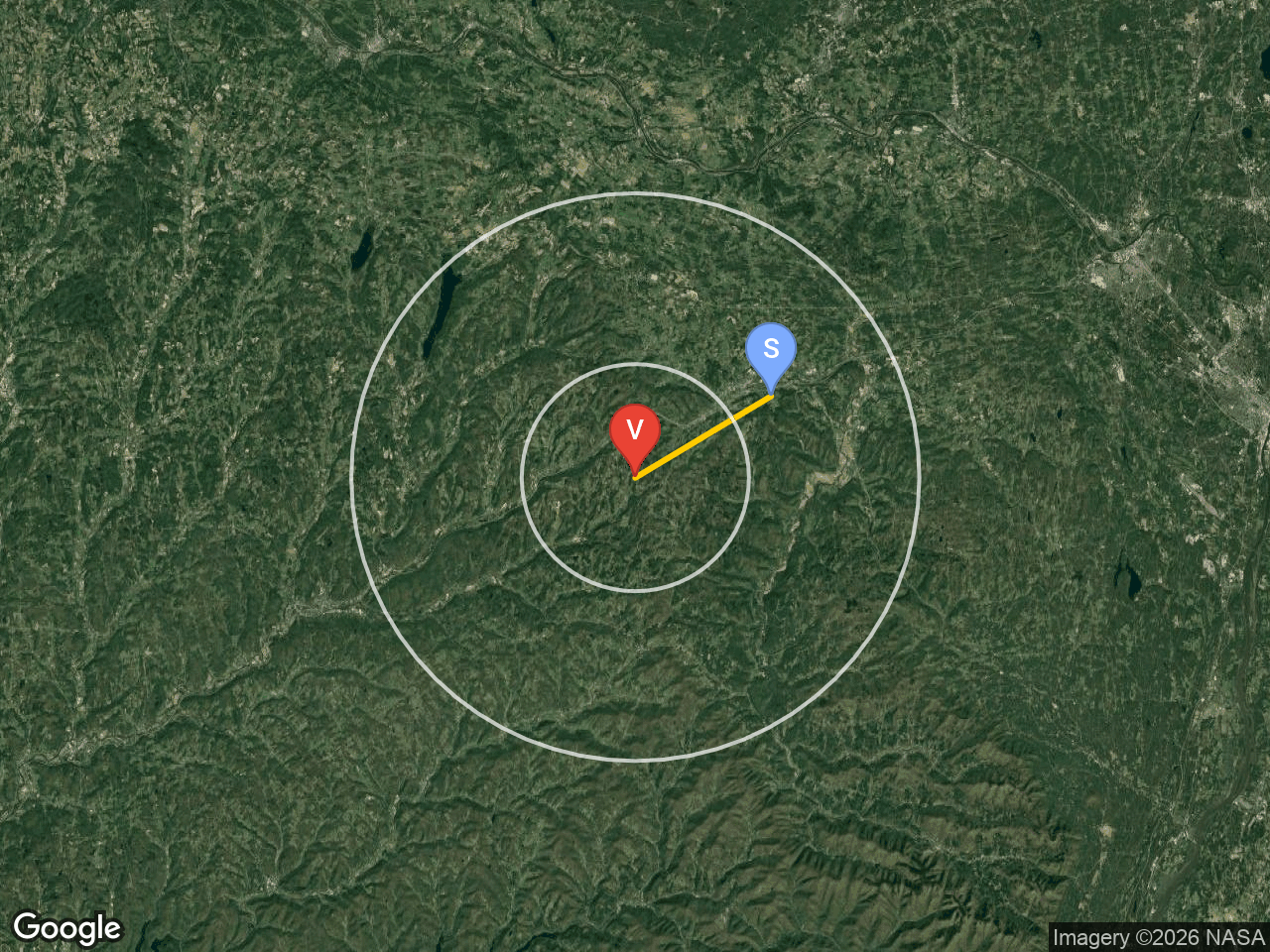
Mid-August at Seven Ponds Farm historically delivers one of the more pleasant temperature profiles you could ask for at a fully outdoor wedding. The average high sits at 74.1°F and the average low at 58.6°F, with hourly means peaking around 73°F in the mid-afternoon and easing back into the low 60s by midnight — a comfortable arc across a full event day. It's also worth noting that the venue sits roughly 970 feet above the nearest reference station, which means temperatures will run about 3.4°F cooler than valley readings, so real-world conditions will feel slightly more refreshing than regional forecasts might suggest.
Heat is not a meaningful planning concern here. Historically, zero percent of years have seen temperatures exceed 90°F around this date, and the mean heat index during event hours is just 67.1°F — well below any threshold that would affect guest comfort or vendor performance. The more relevant flag is on the cool end: roughly 26% of years have seen a day where temperatures dip below 55°F, so late-evening guests — particularly those dressed for a formal summer wedding — may appreciate a light wrap or a heat source near the lounge areas once the sun goes down. Planning for that contingency costs very little and tends to be noticed and appreciated.
The record high for this date is 94°F (set in 2002) and the record low is 26°F (set in 2007), but both represent historical extremes well outside the typical range. For planning purposes, the story is a classic Catskill August evening: warm and agreeable through ceremony and dinner, pleasantly cool as the night progresses.
Humidity & Comfort
Humidity at this location on August 19th falls into a borderline comfort category — present but not oppressive. The mean dew point during event hours runs at 58.7°F, which sits right at the edge of where most guests begin to notice moisture in the air. Mean relative humidity historically averages 76%, which is elevated but typical for the rural Catskill region in late summer. The combination of shaded terrain, elevation, and prevailing westerly flow generally keeps conditions from becoming sticky in the way a coastal or lowland venue might.
The dew point trend through the evening hours is rising — climbing from the upper 50s in the afternoon into the low 60s by late evening. This is a gradual shift and unlikely to cause discomfort on its own, but it is worth noting for vendors working with moisture-sensitive materials. Florals, paper goods like escort cards or menus, and any fabric installations should be accounted for in setup plans, particularly for anything placed outdoors overnight or in the evening hours when dew point is at its highest. A light-touch mitigation — keeping paper elements weighted or stored until needed, and selecting floral varieties with good humidity tolerance — is all that's typically needed.
Winds
Wind planning thresholds
| Indicator | Historical frequency |
|---|---|
| Days with gusts over 25 mph (tent attention) | 32% |
| Days with gusts over 40 mph (structural concern) | 1% |
Winds at Seven Ponds Farm on this date are historically calm and steady — a favorable backdrop for an outdoor ceremony and reception. Mean sustained speeds during event hours average just 6.5 mph, with average gusts around 15.9 mph. The prevailing direction is westerly, which at this inland, elevated location typically means clean, consistent airflow rather than gusty or unpredictable conditions. For most outdoor setups, these are non-event wind speeds.
The one number worth keeping on the radar is that 32% of years have recorded a daily peak gust above 25 mph — roughly one in three years. That's frequent enough to be part of a standard planning checklist rather than an emergency contingency. Lightweight décor, tall floral arrangements, signage, and any fabric elements like draping, chair sashes, or ceremony arches should be secured or weighted as a matter of course. The historical maximum gust on record for this area is 41.8 mph, which falls into the range that can create real disruption for unsecured installations — but at just 1% of years exceeding 40 mph, a true damaging wind event is rare. Standard anchoring and a brief walk-through with your tent or décor vendor before setup is complete is the right call here.
Precipitation
Daily precipitation probability (±7 days of event date)
| At least | Historical probability |
|---|---|
| 0.01" | 51% |
| 0.10" | 23% |
| 0.25" | 14% |
| 0.50" | 7% |
| 1.00" | 1% |
Precipitation is the most active planning variable for this date and setting. Historically, there is a 51% chance of measurable rain (≥0.01 inches) on August 19th itself — meaning rain is essentially a coin flip on any given year. The probability of more meaningful rain drops off quickly: 23% of years see at least 0.1 inches, 14% see 0.25 inches or more, and only 7% see half an inch or more. Heavy rain of an inch or more has occurred in just 1% of years. The wettest day on record for this period brought 2.85 inches. The mean precipitation on a rain day is 0.15 inches — wetting, but not flooding.
Because your Welcome Party and the wedding itself are both fully outdoors, rain readiness is the single most important planning investment you can make. The 3-day window surrounding the event date raises the any-rain probability to 88%, which reinforces that some form of weather protection — whether a tent, a covered backup space, or a clear-span structure — should be treated as essential rather than optional. The good news is that the typical rain event here is not a prolonged downpour; late-summer Catskill rain tends to arrive in short, convective bursts. A solid tent with sidewalls available gives you the flexibility to stay outdoors and simply manage the weather rather than relocate.
An independent station dataset broadly corroborates these figures — the 0.01-inch threshold comes in at 42% in the validation data, suggesting the 51% primary figure may be slightly on the higher end, but meaningful rain risk is confirmed across both sources. The planning recommendation is the same regardless: assume rain is possible, have coverage in place, and brief your vendors accordingly.
Severe Weather
Severe weather climatology near the venue
| Threat | Historical signal |
|---|---|
| Severe thunderstorm wind (50 mi, ±7 days) | 4 reports · 50% of years |
| Hail (50 mi, ±7 days) | 0 reports |
| Tornado (25 mi, ±14 days, 1950–present) | 0 tornadoes · ~0% annual probability |
| Tropical systems (150 mi, event month) | 16 storms on record · ~8% annual probability · 3 direct / 8 moderate / 5 glancing (by closest approach) |
| Thunder heard at nearby airport (±7 days) | 0% of days |
Storm reports 2004–2005; tornado record 1950–2025. Report databases are not exhaustive.
Severe weather at this location on the August 19th date is a low but non-zero background consideration. Thunderstorm wind reports have occurred 4 times in the local storm record, with 50% of years showing at least one such report in the broader summer window — making it the most relevant severe hazard for this event. Hail has no recorded reports in this area, and tornadoes have never been recorded in the historical dataset for this location.
Tropical cyclone influence is a longer-range possibility worth a brief mention. Historically, 8% of years bring a tropical system within influencing distance of this region around this time of year, with a direct-hit probability of 1.7% annually. This is a background risk rather than a planning driver — but it's the kind of thing to monitor in the 7–10 days before the event as you approach the date in 2026. The most notable historical tropical event brought a Category 1 equivalent system within 76 miles. In practical terms, tropical remnants arriving in late August often bring prolonged rain rather than dangerous winds at inland elevations, so your tent and drainage planning already addresses this scenario. No active severe weather warnings are associated with this date in the historical record.
Sun, Moon & Sky
Historical daytime sky conditions
| Sky | Share of daytime hours |
|---|---|
| Clear | 24% |
| Partly cloudy | 18% |
| Mostly cloudy | 21% |
| Overcast | 37% |
August 19th delivers a generous daylight window at Seven Ponds Farm. Sunrise comes at 6:09 AM and sunset at 7:53 PM, with civil twilight extending to 8:24 PM — giving you a long, well-lit afternoon ceremony window and a beautiful natural transition into evening. Golden hour begins at 7:16 PM, which typically aligns well with a late-afternoon ceremony start and creates ideal conditions for outdoor portraits. It's one of the more photogenic times of year in the Catskills.
Cloud cover historically leans toward the cloudy side: 37% of years show overcast conditions, 21% mostly cloudy, 18% partly cloudy, and 24% predominantly clear. That said, even overcast skies in late summer often break during golden hour, and diffuse light on cloudy days can be flattering for portraits. Solar intensity during the midday hours is rated very high, with a UV index of 8 — sunscreen is recommended for guests and vendors spending extended time outdoors during setup and the earlier hours of the event. The moon on August 19, 2026 will be in its First Quarter phase at 44% illumination, providing modest natural ambient light during the evening reception hours.
Venue Microclimate
Summary & Next Steps
Max, the historical climate picture for August 19th at Seven Ponds Farm is genuinely encouraging for an outdoor wedding. Temperatures will almost certainly be comfortable, winds are typically gentle, and the setting's elevation keeps things feeling fresh even on warmer days. The one area that deserves your full planning attention is precipitation — a 51% chance of any rain on the day itself means the question isn't really "will it rain?" but "are we ready if it does?" A tent with available sidewalls, vendor briefings on wet-weather protocols, and a clear chain of communication for day-of decisions will cover the vast majority of scenarios this date can throw at you.
The welcome party deserves equal protection in that plan, since it's also fully outdoors and sits within the same rain window. Build your contingency for both events together, and you'll have covered the primary exposure. Everything else — the temperature, the golden-hour light, the quiet rural setting — is working in your favor. This is a beautiful date and a beautiful venue; the weather history supports your choice.
Prepared by Ironic Reports. Historical patterns inform planning; monitor live forecasts beginning 10 days before your event.